
In this tutorial, we will show you how to install TeamViewer on Linux Mint 21. For those of you who didn’t know, TeamViewer is an application that lets you access other computers remotely such as desktop sharing, online meetings, web conferencing, and file transfer between computers. TeamViewer is available for Microsoft Windows, Linux, macOS, iOS, and Android operating systems.
This article assumes you have at least basic knowledge of Linux, know how to use the shell, and most importantly, you host your site on your own VPS. The installation is quite simple and assumes you are running in the root account, if not you may need to add ‘sudo‘ to the commands to get root privileges. I will show you the step-by-step installation of the TeamViewer remote desktop on Linux Mint 21 (Vanessa).
Prerequisites
- A server running one of the following operating systems: Linux Mint 21 (Vanessa).
- It’s recommended that you use a fresh OS install to prevent any potential issues.
- SSH access to the server (or just open Terminal if you’re on a desktop).
- A
non-root sudo useror access to theroot user. We recommend acting as anon-root sudo user, however, as you can harm your system if you’re not careful when acting as the root.
Install TeamViewer on Linux Mint 21 Vanessa
Step 1. Before running the tutorial below, it’s important to make sure your system is up to date by running the following apt commands in the terminal:
sudo apt update
sudo apt install software-properties-common apt-transport-https wget ca-certificates gnupg2
Step 2. Installing TeamViewer on Linux Mint 21.
By default, TeamViewer is not available on the Linux Mint 21 base repository. Now we add the Skype repository to your system using the following command:
echo "deb [arch=amd64 signed-by=/usr/share/keyrings/teamview.gpg] http://linux.teamviewer.com/deb stable main" | sudo tee /etc/apt/sources.list.d/teamviewer.list
Next, import the GPG key:
curl -fsSL https://download.teamviewer.com/download/linux/signature/TeamViewer2017.asc | gpg --dearmor | sudo tee /usr/share/keyrings/teamview.gpg > /dev/null
Now start by updating the packages list and install TeamViewer stable by using the command below:
sudo apt update
sudo apt install teamviewer
Step 3. Accessing TeamViewer on Linux Mint 21.
Once we finish with the installation, we will find TeamViewer in the Mint menu, in the Internet section or you can launch it through the terminal with the help of the command shown below:
teamviewer
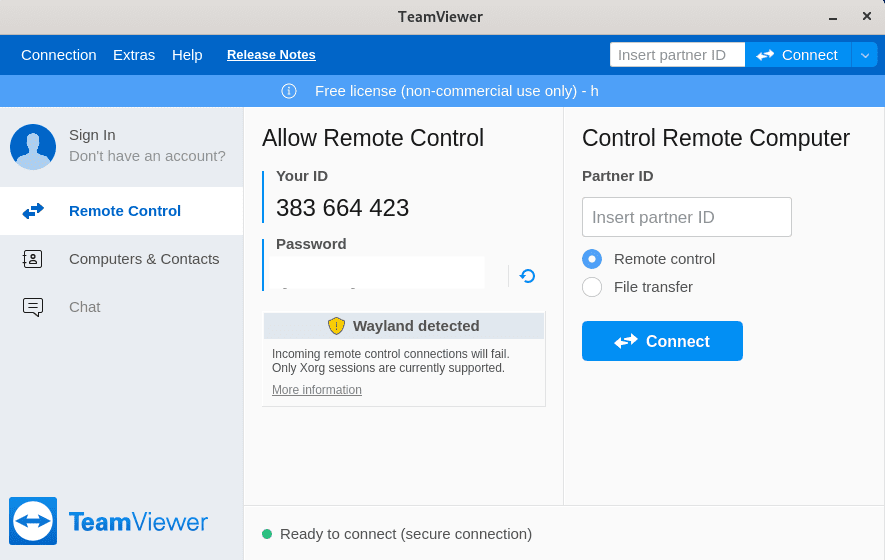
Step 4. Troubleshooting Tips.
- If TeamViewer is not connecting, check if your firewall is blocking the necessary ports. Ensure that ports 5938 and 80/443 are open for TeamViewer to function properly.
- If TeamViewer is not working due to an outdated version, update it to the latest version. You can either check for updates through the Linux Mint 21 Update Manager or manually download and install the latest version from the TeamViewer website.
- If you’re experiencing performance issues, try disabling visual effects or reducing the screen resolution on the remote computer to improve the connection speed.
Congratulations! You have successfully installed TeamViewer. Thanks for using this tutorial for installing the latest version of TeamViewer remote desktop on the Linux Mint system. For additional help or useful information, we recommend you check the official TeamViewer website.