
In this tutorial, we will show you how to install TeamViewer on Manjaro. TeamViewer is a powerful software that enables remote access and control of computers over the internet. It’s a versatile tool used for remote troubleshooting, file transfers, desktop sharing, and even online meetings.
This article assumes you have at least basic knowledge of Linux, know how to use the shell, and most importantly, you host your site on your own VPS. The installation is quite simple and assumes you are running in the root account, if not you may need to add ‘sudo‘ to the commands to get root privileges. I will show you the step-by-step installation of the TeamViewer on a Manjaro Linux.
Prerequisites
- A server or desktop running one of the following operating systems: Manjaro, and other Arch-based distributions.
- It’s recommended that you use a fresh OS install to prevent any potential issues.
- SSH access to the server (or just open Terminal if you’re on a desktop).
- A stable internet connection is crucial for downloading and installing packages. Verify your connection before proceeding.
- Access to a Manjaro Linux system with a non-root sudo user or root user.
Install TeamViewer on Manjaro
Step 1. Keeping your system up-to-date is crucial for security and stability. Before installing any new software, it’s good practice to update your system. In Manjaro, you can do this using the pacman package manager. Open your terminal and enter the following command:
sudo pacman -Syu
sudo pacman -S base-devel
Step 2. Installing TeamViewer on Manjaro.
Manjaro uses the Arch User Repository (AUR), a community-driven repository for Arch users. It contains package descriptions (PKGBUILDs) that allow you to compile a package from the source and then install it. TeamViewer is available in the AUR.
To install TeamViewer, we’ll use pamac, a package manager that comes with Manjaro. It simplifies the process of installing packages from the AUR. Enter the following command in your terminal:
pamac build teamviewer
This command builds the TeamViewer package from the AUR and installs it on your system.
Step 3. Enabling and Starting the TeamViewer Daemon.
TeamViewer operates through a system service called a daemon. This daemon runs in the background and manages the TeamViewer application. After installing TeamViewer, you need to enable and start this daemon.
To enable the TeamViewer daemon so it starts at boot, enter the following command:
sudo systemctl enable teamviewerd
Next, start the TeamViewer daemon with the following command:
sudo systemctl start teamviewerd
Step 4. Accessing TeamViewer on Manjaro.
With the TeamViewer daemon running, you can now launch TeamViewer. In the terminal, enter the following command:
teamviewer
This command opens the TeamViewer interface, where you can start using the application.
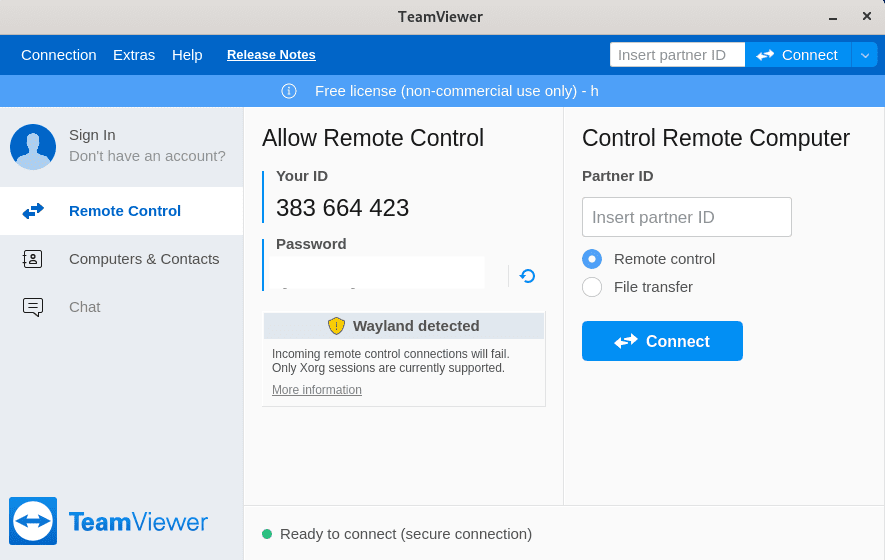
Congratulations! You have successfully installed TeamViewer. Thanks for using this tutorial to install the latest version of the TeamViewer on the Manjaro system. For additional help or useful information, we recommend you check the official TeamViewer website.